
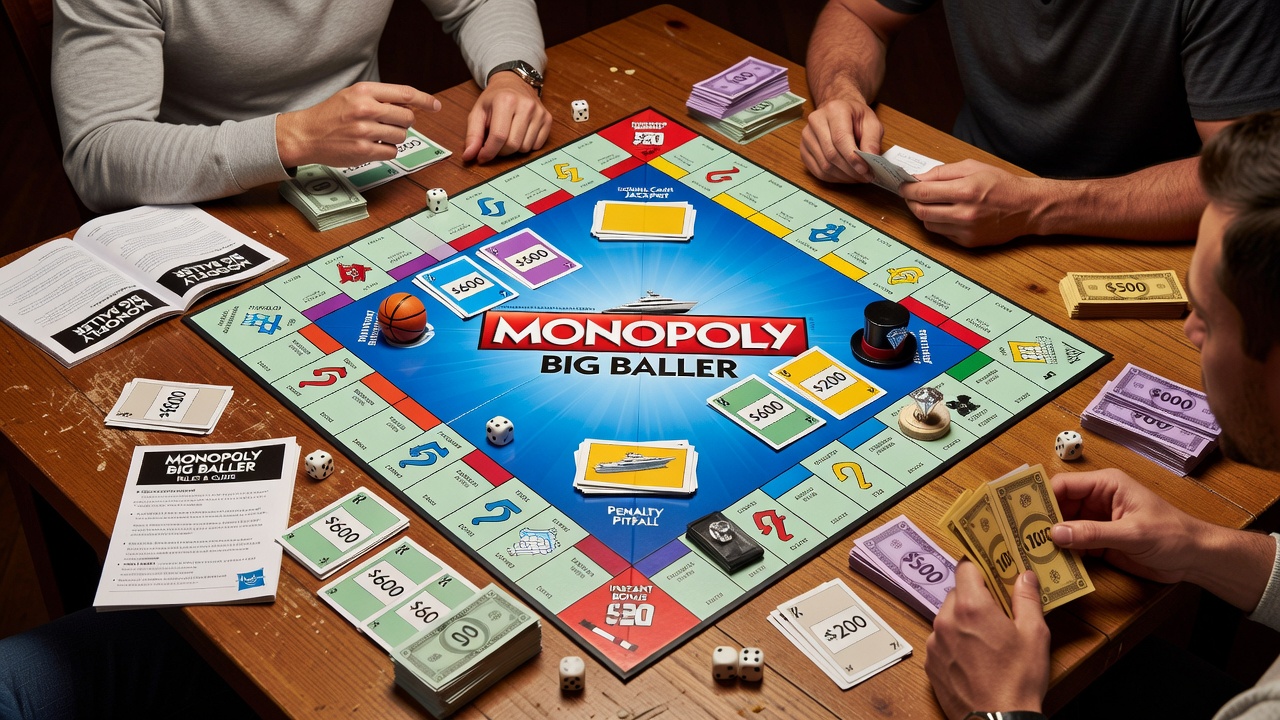
A single roll of the dice in Monopoly Big Baller can shift the balance of an entire match faster than in any classic edition of the game. That speed is deliberate. Where traditional Monopoly rewards patience and slow accumulation, this version compresses the tension into shorter bursts, forcing players to gamble on bigger plays with less time to hedge their bets. For longtime fans of the franchise, that shift alone makes it worth a closer look.
This monopoly big baller game review examines what actually changes on the board, how the mechanics differ from the property-trading formula everyone grew up with, and whether the new pacing improves or dilutes the experience. Readers who want a fast answer before committing money or time can also check the current promotional version through open site, where the digital adaptation runs alongside physical release details. Everything below, however, focuses on the tabletop experience itself - the box contents, the rule changes, and the reasons this edition has carved out its own niche among Monopoly variants.
What follows is a full breakdown: how a session actually plays out, what the rulebook demands of new players, how the board game edition compares to the standard release, and where this version might disappoint players expecting a slow-burn strategy game. Anyone deciding whether to add this box to their shelf will find the practical details they need here.
What Is Monopoly Big Baller and How Does It Differ From Classic Monopoly
Monopoly Big Baller takes the core identity of the original - buy properties, collect rent, bankrupt opponents - and rebuilds the pacing around risk-heavy decisions. Instead of slowly building a monopoly over dozens of turns, players are pushed toward aggressive investment early, with mechanics that reward bold bets over cautious accumulation. The name itself signals the design philosophy: this is a version built for players who want to go big rather than grind out a long, defensive game.
Origins and Design Intent
The Big Baller edition emerged from Hasbro's ongoing pattern of releasing themed and mechanically altered Monopoly spin-offs, a strategy the company has used for decades to keep the franchise relevant to new audiences. Rather than reskinning the board with a new theme alone, this edition modifies core systems - money flow, property acquisition speed, and bankruptcy conditions - to produce noticeably shorter, higher-stakes sessions.
Key Differences From the Standard Edition
Several structural changes separate this version from the Monopoly most households already own:
- Higher starting capital, encouraging early aggressive purchases instead of slow saving
- Adjusted rent multipliers on high-value properties to accelerate bankruptcies
- Streamlined property groups that reduce the total number of turns needed to form a monopoly
- Bonus cash events tied to specific board spaces, absent from the traditional ruleset
These changes matter because they directly affect session length - a factor that has always been one of classic Monopoly's biggest criticisms.
Monopoly Big Baller Gameplay Breakdown
Gameplay in this edition rewards a different mindset than the original. Where classic Monopoly punishes reckless spending, Big Baller often punishes hesitation instead. Players who wait too long to commit capital to a property group frequently find themselves priced out by opponents who moved first.
Turn Structure and Player Actions
Each turn still follows the familiar roll-move-act sequence, but the action phase carries more weight. Because starting cash is higher and rent scales faster, a single turn can swing a player from comfortable to nearly bankrupt. This raises the stakes of every decision point, including whether to buy, auction, or pass on an available property.
Risk and Reward Mechanics
The defining feature of monopoly big baller gameplay is the introduction of escalating risk-reward spaces. Certain tiles offer the chance to double cash holdings with a successful dice condition, but failure results in a matching penalty. This mechanic doesn't exist in the base game and fundamentally changes how conservative players need to approach the board - sitting back and waiting is rarely a winning strategy here.
Typical Match Length
Where a standard Monopoly match can run two hours or longer, Big Baller sessions are designed to resolve in roughly half that time. The faster bankruptcy curve and larger starting transactions push the game toward a decisive outcome well before players lose interest - a deliberate answer to one of the franchise's longest-standing complaints.
Monopoly Big Baller Rules Explained
Understanding the monopoly big baller rules is essential before the first game, since several mechanics diverge sharply from what most players assume they already know.
Setup Differences
Starting cash allocation is higher than standard Monopoly, and the bank distributes an additional set of bonus cards at the start of play. These cards introduce optional risk events players can trigger voluntarily, adding a layer of choice absent from the traditional setup phase.
Modified Property and Rent Rules
Rent scaling increases faster once a player owns a full color group, and hotel construction costs are generally lower, encouraging faster development. This makes early monopolies far more dangerous for opponents than in the classic game, where building up rent income takes considerably longer.
Bankruptcy and Endgame Conditions
The endgame triggers sooner. Instead of requiring a player to exhaust all assets completely, Big Baller uses a threshold system: falling below a set cash level while holding no liquid property to sell ends a player's run. This rule alone shortens matches significantly and forces sharper financial planning throughout.
Monopoly Big Baller Board Game Edition: What's Inside the Box
The physical board game edition follows Hasbro's standard production quality, with a board, tokens, currency, property cards, and dice included, but several components are unique to this release.
Board Layout and Visual Design
The board retains the familiar square layout but replaces several classic spaces with Big Baller-specific tiles tied to the risk-reward mechanic. Color schemes lean toward bolder, high-contrast palettes, reflecting the edition's higher-stakes identity.
Included Components
Standard components include:
- Custom player tokens designed for the edition
- A denomination set of currency matching the higher starting capital requirement
- Property deed cards with adjusted pricing and rent tables
- Special event cards tied to the bonus risk spaces
Build Quality and Replay Value
Component durability matches other modern Monopoly editions - sturdy cardstock tokens, standard-weight cards, and a board built for repeated folding without immediate wear. Replay value benefits from the faster match length, since players are more likely to start a second round in the same sitting than they would with the traditional edition.
Monopoly Big Baller Game Review: Strengths, Weaknesses, and Who It's For
Every edition of Monopoly makes trade-offs, and Big Baller is no exception. Its strengths and weaknesses stem directly from the same design choice: speeding up the game at the cost of long-term strategic depth.
What Works Well
The shortened match length solves a real problem. Groups that avoided Monopoly nights because of the time commitment now have a version that resolves in a single sitting without dragging into a second hour of diminishing returns. The risk-reward spaces also add genuine tension that the original board never offered.
Where It Falls Short
Players who enjoy the slow, methodical negotiation phase of classic Monopoly may find Big Baller's faster pace removes some of that depth. Trading between players carries less weight when cash flows faster and bankruptcies happen sooner - some of the diplomatic maneuvering that defines long Monopoly sessions gets compressed or lost entirely.
Ideal Player Groups
This edition suits groups looking for a shorter, higher-energy session - family game nights with limited time, casual players new to the franchise, or veterans wanting a change of pace from the standard rules. Serious strategy-focused players who prize long-term planning may prefer the original board or other variants built around deeper economic systems.
Frequently Asked Questions
Is Monopoly Big Baller compatible with pieces from the classic edition?
No. The currency denominations and property pricing are recalibrated specifically for this edition, so mixing components from the standard game will unbalance the economy and break the intended pacing.
How long does an average game take to finish?
Most sessions resolve in under an hour once players understand the rule changes, roughly half the time of a typical classic Monopoly match. First-time groups still learning the risk-reward spaces may run slightly longer.
Can Monopoly Big Baller be played with only two players?
Yes, though the experience shifts significantly. With fewer players competing for properties, monopolies form faster and bankruptcies happen even sooner, making two-player matches noticeably shorter and more direct than larger group sessions.
Does this edition require house rules to play properly?
No. The rulebook included in the box covers all mechanical changes needed to play correctly, including the bonus risk spaces and adjusted bankruptcy threshold. House rules are optional but not necessary for a complete game.
Is there a digital or online version available?
Yes, digital adaptations exist alongside the physical board game edition, allowing players to try the mechanics before purchasing the tabletop version or to continue playing when a full group isn't available in person.
Who should avoid this edition?
Players who specifically enjoy long, drawn-out negotiation and slow economic buildup should be cautious, since the faster pacing and higher starting capital remove much of that extended strategic runway found in the original game.