
Lucky Coming: Product, Software, and Live Demo Walkthrough (Plus an Interactive Demo)
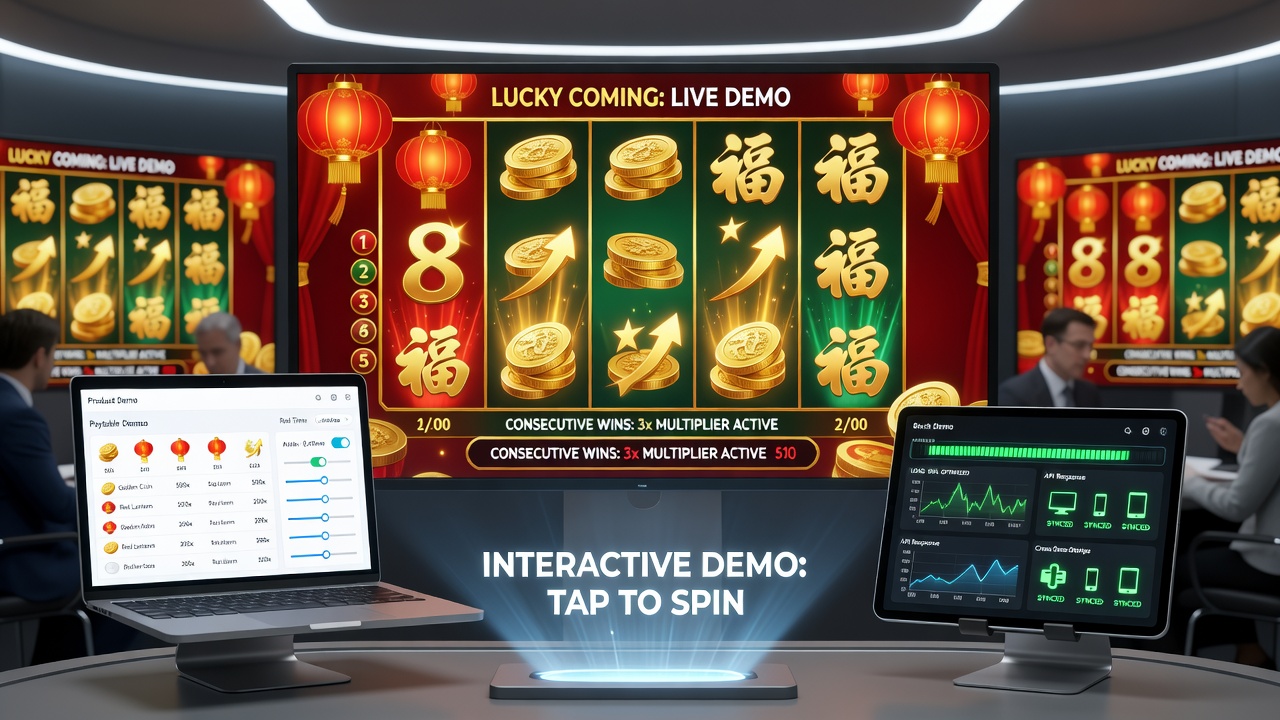
A slot title survives its first ninety days or it disappears from the lobby entirely. That single fact explains why operators and players alike scrutinize a new release before committing real money to it. Lucky Coming has drawn attention precisely because it gives both groups a way to look under the hood before any wager is placed, and that transparency is rarer than it should be in this industry.
Most players discover the title through word of mouth or a casino's featured games row, then go searching for a way to test it without risk. That search usually ends at a lucky coming demo, a free-play version that mirrors the paid game's mechanics, reel behavior, and payout structure without touching a real balance. Anyone who wants to see the interface in motion, rather than read about it secondhand, can try the lucky coming demo directly and judge the pacing for themselves. What follows is a full breakdown of the product, the software running underneath it, and the live demonstration formats available to prospective players and operators.
The sections ahead cover the game's design philosophy, its technical backbone, how the walkthrough demo differs from a live session, and what an interactive demo actually lets you control. By the end, the distinction between marketing claims and verifiable gameplay should be clear.
What Lucky Coming Actually Is
Core Concept and Theme
Lucky Coming belongs to the category of fortune-themed slot games built around symbols of prosperity - coins, lanterns, and auspicious numerals feature heavily in its visual language. The theme is not incidental; it's a deliberate choice that appeals to players who gravitate toward luck-based iconography, a segment that has remained commercially steady across multiple markets for years. The design leans on saturated color palettes and rhythmic animation cycles rather than complex narrative framing, which keeps the pace brisk.
Target Audience and Use Case
The game is built for two distinct groups: casual players looking for a fast, visually rewarding session, and operators evaluating whether the title fits their existing catalog. For the second group, a lucky coming product demo serves a different purpose than it does for a player - it's less about entertainment and more about verifying compatibility, load times, and how the game behaves across device types before integration.
How It Differs From Similar Titles
Where many fortune-themed slots rely on static paytables and predictable bonus triggers, Lucky Coming introduces layered multipliers that shift based on consecutive wins. This isn't a dramatic departure from genre conventions, but it's enough to distinguish the mechanics from a straight reskin of an older template, which is a common complaint in this niche.
Software Behind the Product
Engine and Platform Compatibility
The software runs on a standard HTML5 framework, which means it loads in-browser without requiring a separate client download. This matters for accessibility - players on mobile devices get the same experience as those on desktop, with no meaningful lag between the two. A lucky coming software demo is the most direct way to confirm this claim, since load behavior varies more in practice than in specification sheets.
Random Number Generation and Fairness
Fairness in any slot title depends on an independently tested random number generator, and reputable providers submit their RNG systems for third-party certification. Players evaluating a new title should look for this certification before assuming the odds displayed in the paytable reflect actual long-term outcomes. This is a detail the software demo cannot fully substitute for, but it does let you observe outcome distribution over a sample of spins.
Integration for Operators
For casino operators, the technical side goes beyond visuals. API documentation, session logging, and currency handling all need testing before a title goes live on a real platform. This is where a structured lucky coming software demo earns its value - it exposes integration friction early, before it becomes a support ticket after launch.
Live Demo Walkthrough
What a Live Demo Session Includes
A live demo differs from a static walkthrough in one important way: it happens in real time, often narrated by someone who can answer questions as the game plays out. A lucky coming live demo typically walks through a full spin cycle, bonus round triggers, and the multiplier mechanic in sequence, giving viewers a chance to see edge cases rather than just the highlight reel.
Step-by-Step Walkthrough Format
The walkthrough format usually follows a consistent order:
- Interface orientation - paytable, bet adjustment, autoplay controls
- Base game spin behavior and symbol payout hierarchy
- Bonus feature activation and how it modifies the multiplier
- Session summary showing return behavior over the demo period
This structure is intentional. A lucky coming walkthrough demo that skips straight to bonus features without covering the base game leaves viewers with an incomplete picture of volatility, which matters more than any single big win shown on screen.
What to Watch For During the Walkthrough
Pay attention to how often the base game pays smaller amounts versus how rarely the larger multipliers trigger. That ratio tells you more about the game's actual volatility than the marketing copy ever will. A patient viewer watching a full walkthrough demo will notice these patterns within the first few dozen spins.
Interactive Demo: Hands-On Testing
How the Interactive Demo Differs From a Recorded Walkthrough
A recorded walkthrough shows you someone else's session. An interactive demo puts the controls in your hands. This distinction matters because betting behavior, pacing, and decision-making around autoplay settings are personal - watching someone else play doesn't reveal how the game feels when you're the one adjusting the bet size mid-session.
Setting Bet Levels and Testing Volatility
Within the interactive demo, players can adjust stake size and observe how the return pattern shifts. Lower bets tend to smooth out variance over a longer session, while higher bets expose the game's volatility ceiling faster. Testing both extremes gives a more honest read on the title than sticking to a single bet size throughout.
Practical Limitations of Free-Play Testing
Free-play credit doesn't carry the same psychological weight as real money, so outcomes during an interactive session tend to feel less consequential than they would in a paid round. That's worth keeping in mind - the mechanics you observe are accurate, but the emotional experience of risk isn't fully replicated in demo mode.
Comparing the Demo Formats
Product Demo vs. Software Demo
A product demo focuses on gameplay and visual presentation - the experience a player actually sees. A software demo, by contrast, is aimed at the technical layer: load speed, API response, and platform compatibility. Operators generally need both before signing an integration agreement, since a title can look polished in a lucky coming product demo and still cause backend issues once deployed at scale.
Live Demo vs. Interactive Demo
Live demos are guided and passive; interactive demos are self-directed and hands-on. Neither replaces the other - a live session is faster for getting a general sense of the game, while an interactive session is better suited to players who want to test specific betting strategies before committing real funds.
Choosing the Right Format for Your Purpose
Players curious about visual appeal and pacing should start with a walkthrough demo. Those planning to wager real money should move to an interactive session afterward. Operators evaluating the title for their platform need the software demo above all else, since that's where compatibility issues surface first.
Frequently Asked Questions
Is the lucky coming demo identical to the real-money version in terms of odds?
The underlying RNG and payout structure are designed to match the real-money version, since regulators generally require demo and paid versions to share the same mathematical model. Minor differences can exist in session length or credit reset behavior, but the core odds should remain consistent between the two.
Do I need to create an account to access the interactive demo?
Most platforms allow demo access without registration, since the point is to lower the barrier for evaluation. Some operators do require a free account to track demo usage, but this is typically a lighter process than full account verification for real-money play.
How long does a typical live demo session last?
A guided live demo usually runs between ten and twenty minutes, long enough to show base gameplay, at least one bonus trigger, and a session summary. Longer formats exist for operator-focused walkthroughs that also cover backend integration details.
Can operators customize the software before launch?
Customization options vary by provider but often include currency settings, bet limit ranges, and branding elements around the game frame. Core game mechanics like the RNG and paytable structure are generally locked to preserve certification validity.
Does playing the demo version affect my chances in real-money play afterward?
No. Demo sessions and real-money sessions run on separate credit systems with no carryover effect on future outcomes. Each real-money spin is independent, regardless of how many demo rounds were played beforehand.
What's the best way to judge volatility from a walkthrough demo alone?
Watch the frequency and size of payouts across a substantial number of spins rather than focusing on a single large win. A walkthrough that shows at least fifty to a hundred spins gives a more reliable impression of how often the game pays small amounts versus how rarely it delivers big multipliers.